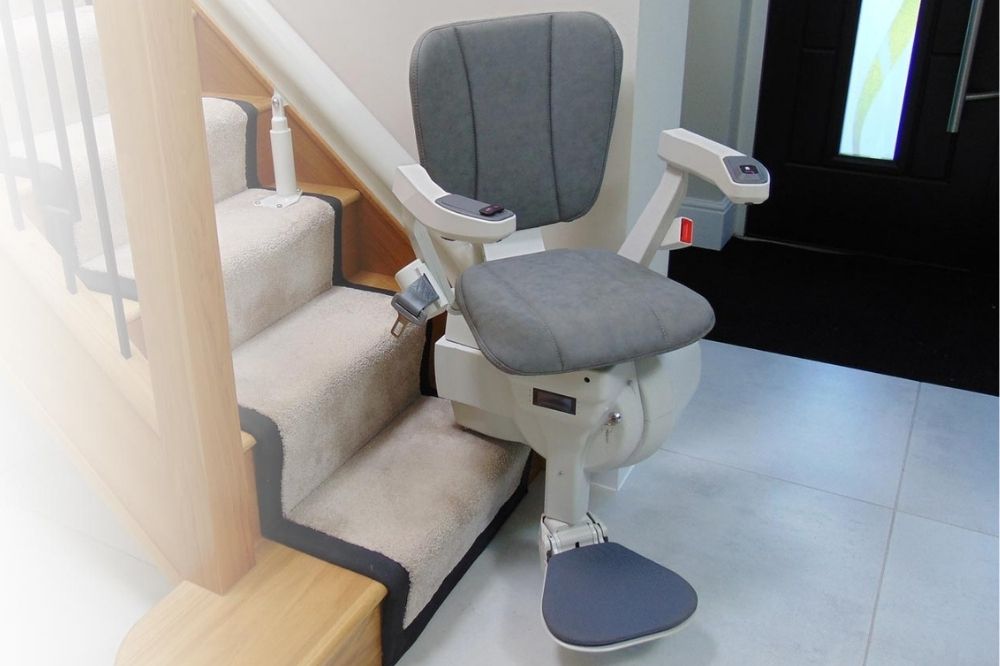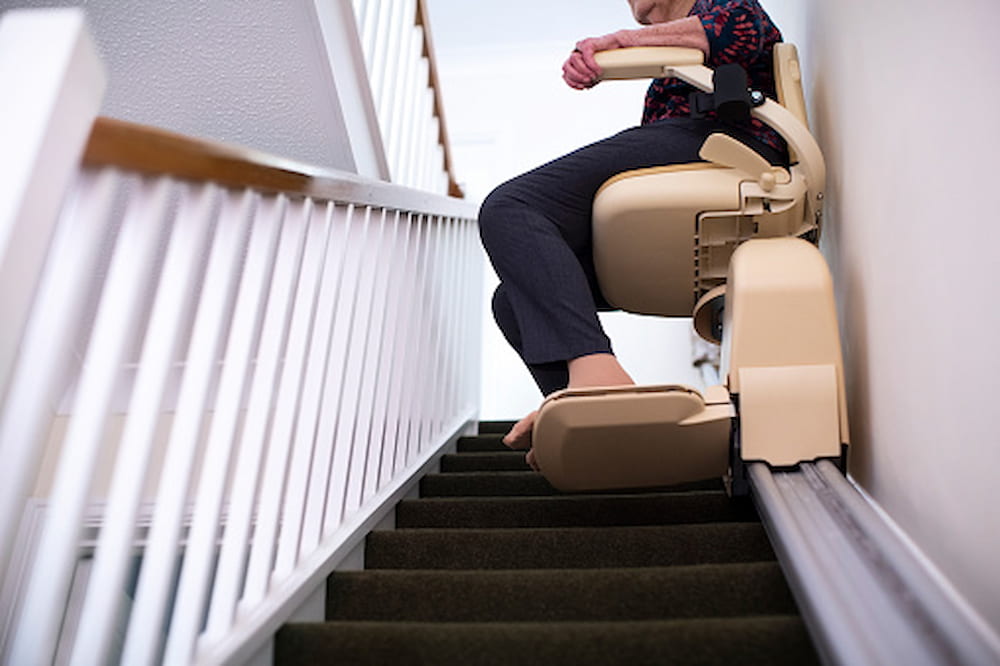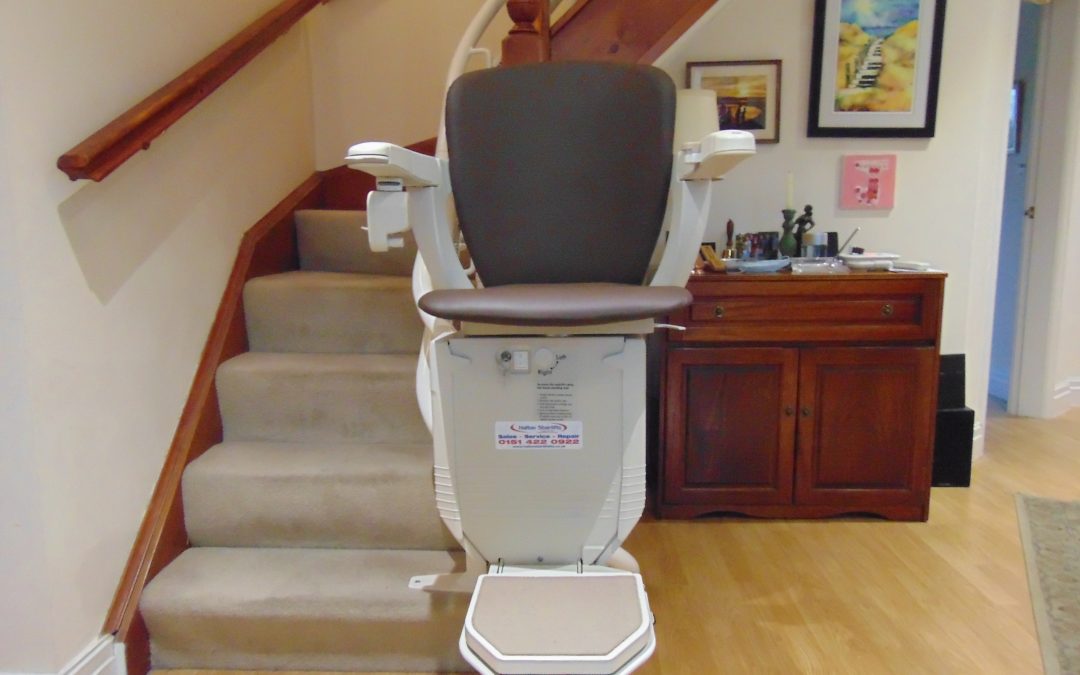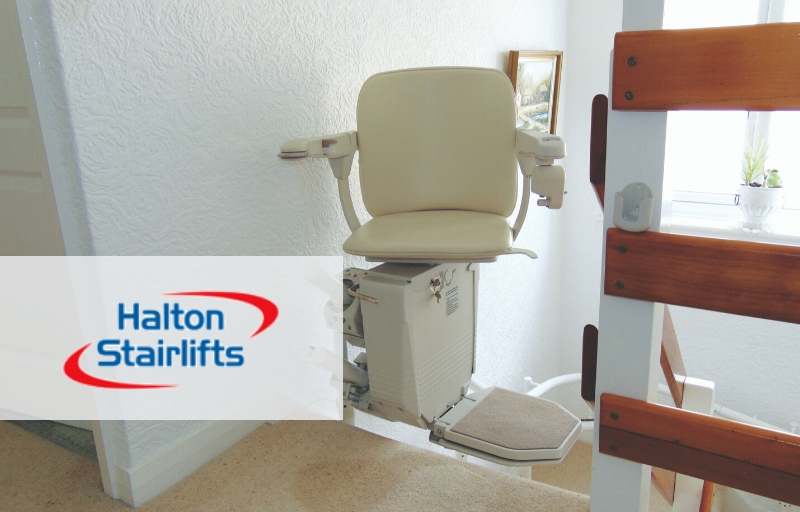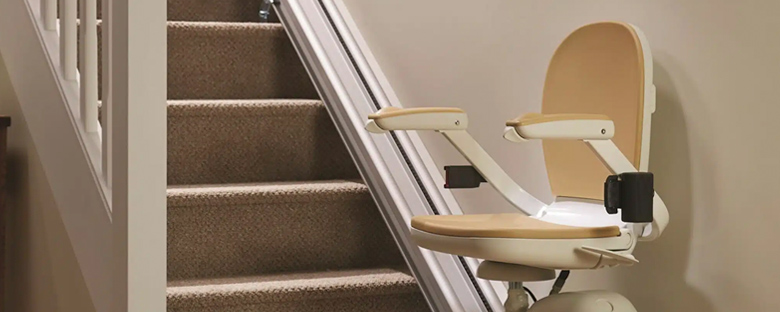
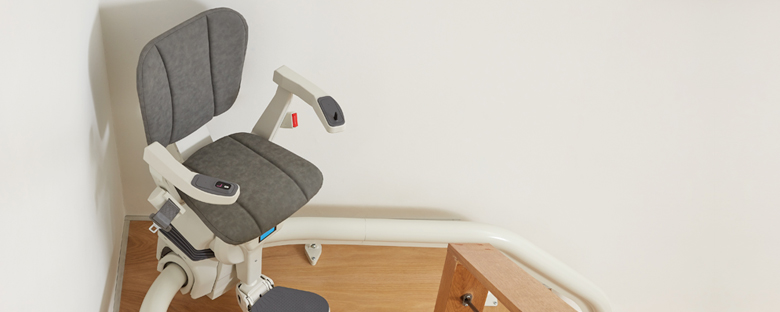
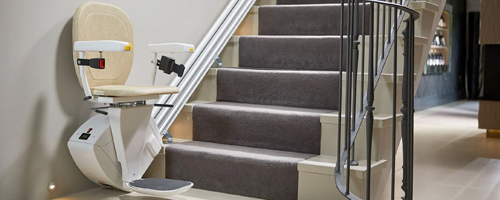
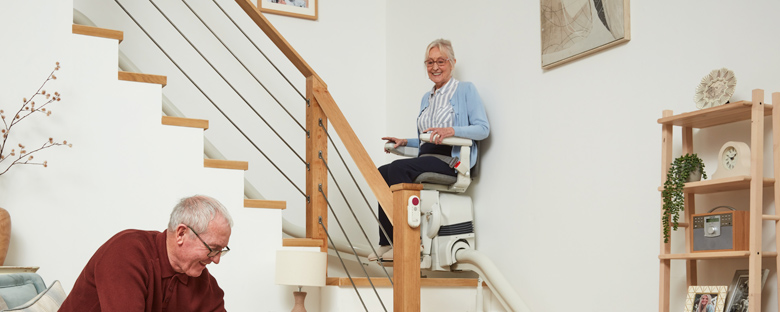


Stairlift rails are available in a range of shapes and sizes, including straight, curved, and narrow designs. Many homes and commercial properties across the UK now rely on stairlifts to help ensure safety and maintain independence.
If you require a stairlift rail and want to learn more about the different types, how to choose the right one, and what stairlift rail installation involves, continue reading.
What are Stairlift Rails?
Stairlift rails (tracks) are metal paths fixed directly to staircase treads to help a stairlift move up and down between floors in your home or commercial building.
The most suitable rail depends on the shape of your staircase and its width. Stairlift rails are highly customisable to fit your space, available in both single-rail (monorail) and double-tubular configurations.
Most stairlift rails are usually made from aluminium or steel, both chosen for their strength and durability without adding excess weight to your staircase.
Types of Stairlift Rails
There are many types of stairlift rails available, including straight, hinged-rail, and outdoor designs. The most suitable stairlift rail will depend entirely on your staircase’s shape, width, and surrounding obstructions.
Straight Rails
Straight rails are typically designed for staircases with no bends, half-landings, or curves. They’re the most common and cost-effective stairlift rails, often taking just a couple of hours to install. The rails run parallel to the stairs from bottom to top, offering the most straightforward design.
Curved Rails
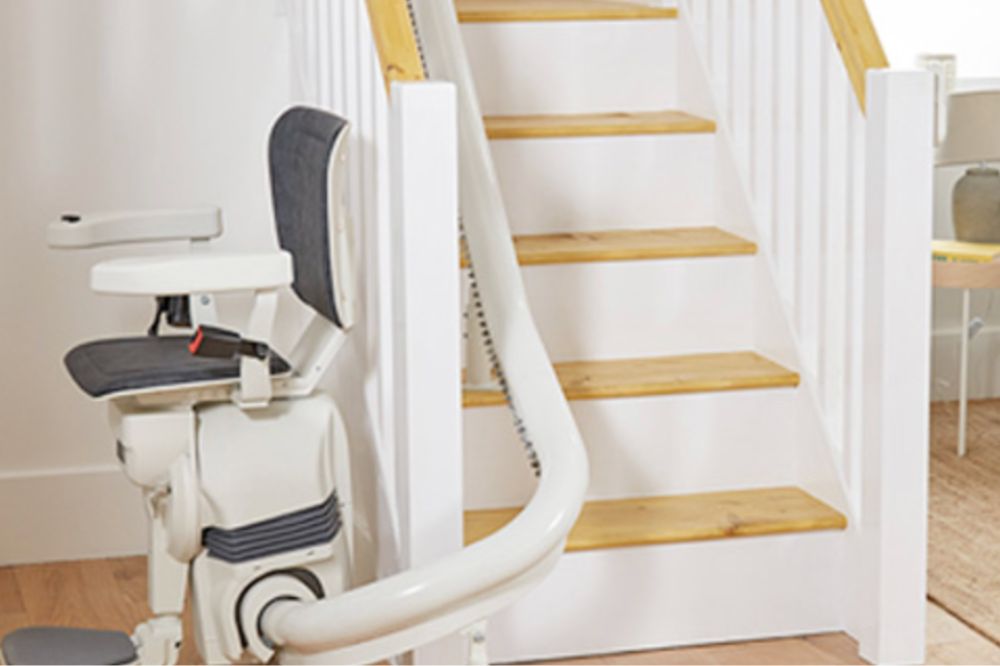
Curved rails are custom-made for staircases that turn, spiral, or have half-landings. Stairlift rails for curved staircases are manufactured to match the exact shape of your stairs, allowing for a seamless installation and smooth travel around harsh bends or multiple levels.
Compared to straight stairlift rails, curved designs are often more expensive due to the custom requirements and longer installation time.
Hinged Rails
Hinged (retractable) rails are often installed with straight stairlifts. They’re best for staircases with minimal space or obstructions, such as doorways or cupboards, to reduce the risk of tripping accidents. Hinged rails allow you to fold the stairlift away manually or with power when it isn’t in use.
Narrow Rails
Narrow rails are specifically built for tight staircases where space is limited. They’re created with slimmer designs and compact carriages to maximise tread width. Narrow rails meet the same safety standards as other stairlifts, and are often made with fold-away seats and footrests to keep the surrounding staircase space as clear as possible.
Outdoor Rails
If poor mobility restricts you from enjoying time outside, you may benefit from an outdoor stairlift. Outdoor rails are made with weather-resistant materials to withstand harsh UK weather conditions and temperature changes, mainly installed on exterior garden steps.
How to Choose the Right Stairlift Rail for Your Home
You can’t necessarily choose a stairlift rail for your home, as you’ll only have one or two options to consider based on the type of staircase you have (straight or curved) and its width.
To find out what stairlift rail will be most suitable, follow our simple steps:
- Shape – Identify the shape of your staircase using a measurement guide to gain a brief understanding of what type of stairlift you may need.
- Width – Look at the width of your staircase to decide if you’d benefit from a narrow rail to keep the space as clear as possible.
- Location – Think about the areas in and around your home or commercial space where you may be limited, including outdoor and indoor staircases.
- Clearance – Check for potential obstructions that may affect clearance around the bottom and top of your staircase, such as doorways and cupboards.
- Assessment – After gaining an understanding of what type of stairlift rail you may need, book a professional home assessment for a qualified engineer to visit your property and confirm the best-suited rail for your circumstances.
How Much Does Stairlift Rail Installation Cost in the UK?
The average cost of stairlift rails is between £1,500 and £5,000+, depending on the type of stairlift rail you have installed:
| Stairlift Rails | Cost |
|---|---|
| Straight | £1,500+ |
| Curved | £3,500+ |
| Hinged | £2,000+ |
| Narrow | £1,500+ (increases if the rail is curved) |
| Outdoor | £2,500+ |
Stairlift engineers will typically bundle the cost of the rail, the chair (stairlift), and installation into a single final price.
Please note that prices can vary and may be lower if you opt for a reconditioned model. For an exact quote, you should contact your chosen manufacturer.
What Does Stairlift Rail Installation Involve?
Stairlift rail installation typically involves:
- Assessment – A qualified engineer will visit your home and accurately measure your staircase to assess its shape, width, and any obstructions to confirm the type of stairlift rail you need.
- Planning – Based on the assessment, your engineer will plan the exact rail route, including how many fixing brackets are needed and where the rail will start and finish on your stairs.
- Preparation – The installation area will be cleared of any furniture or obstacles before the stair treads are inspected to ensure they can fully support the rail without causing damage.
- Marking – Referring to the planned layout, precise markings will be added on each step to show where the rail brackets will be fixed.
- Fixing – Holes will be drilled into the stair treads, and brackets will be screwed into place to provide a base for the rail to be positioned onto.
Professional Stairlift Rail Installation Across the UK
If you’re unsure what stairlift rail is best suited for your home or commercial space, we can help.
At Halton Stairlifts, we provide expert stairlift rail advice and installation to match your staircase and mobility requirements to the right stairlift rail. We offer all rail types, including those for straight staircases and designs made for outdoor use.
To discuss our stairlift rail installation process, please contact our team today.
FAQs
Can you remove a stairlift chair from a rail?
Yes, you can remove a stairlift chair from the rail by turning off the power, removing the end stops, and carefully lifting the chair off the open rail.
If you need expert stairlift removal, our team can assist with our trusted removal service.
Can stairlift rails be cut?
Yes, stairlift rails can be cut to length on site by a trained engineer to ensure they match the shape and length of your staircase. However, curved rails are custom-built to fit the exact measurements of your staircase, so they should not be cut or altered once ready to install.
Can you have a handrail with a stairlift?
Yes, in most cases, you can have a handrail alongside your stairlift if there’s enough handhold space. Stairlifts are attached to stair treads, not the wall, so a wall-mounted handrail can often remain in place or be installed.
How long do stairlift rails take to install?
The time it takes to install stairlift rails depends on whether they’re straight or curved. Standard, straight rails take up to four hours to install, whereas curved rails can take a couple of days depending on complexity.
Do stairlift rails damage the stairs or walls?
Stairlift rails are fixed to stair treads, meaning small holes will be left where the brackets are fixed, but they can usually be filled and covered if you decide to have your stairlift removed. Because stairlifts are installed to the treads, this means they won’t damage your walls.
- Attaching – The rail will be connected to form a track, then lifted and securely screwed into place.
- Adding Additional Features – If a hinged rail is needed due to obstructions, the folding mechanism will be fitted and adjusted at the end of the rail to ensure the stairlift can be moved when it’s not in use.
- Mounting – The chair seat, footrest, and armrest are aligned and fastened into place to make the stairlift fully usable.
- Testing – Your engineer will connect your stairlift to a nearby power socket to activate the battery and test it out to ensure everything is working properly with the rail attached.
- Handover – Final safety inspections will be carried out to identify any necessary adjustments. Your engineer will demonstrate how to use the stairlift safely before handing over to you and answering any questions you may have.

Neil is the founder of Halton Stairlifts. He has years of experience installing stairlifts across the UK. With an eagerness to help those with mobility issues get up the stairs, Neil understands how important it is for a seamless and straightforward approach to installing stairlifts to help those in need quickly.