

Are you considering purchasing a mobile stairlift in the UK? Many people struggle with mobility, facing daily challenges that prevent them from safely accessing areas of their home or a commercial premises.
Traditionally, stairlifts have provided a reliable solution, offering a permanent way to move safely between floors. However, not every home can accommodate a fixed installation, and not everyone requires a long-term solution. Mobile stairlifts can often provide a practical and flexible alternative.
If you’re thinking about getting a mobile stairlift for yourself or a loved one, follow our blog as we discuss the different types, costs, benefits, and alternatives to consider.
What is a Mobile Stairlift UK?
A mobile stairlift in the UK is a portable, battery-powered device specifically designed to help individuals navigate stairs safely without the need for permanent installation.
In comparison to traditional, fixed stairlifts, a mobile stairlift in the UK is lightweight and transportable, meaning it can be moved between rooms or even different homes. This makes them an excellent choice for temporary use, short-term rehabilitation, or properties where structural modifications are not allowed, such as rented accommodation.
According to the British Woodworking Federation, 43% of UK adults reported having slipped, tripped, or fallen on stairs last year, and 60% of these incidents occurred in their own home. Mobile stairlifts offer a safe, portable solution for navigating stairs without permanent installation, reducing the risk of falls for those with limited mobility.
How Does a Mobile Stairlift Work?
Mobile stairlifts work using motorised mechanisms, usually powered by rechargeable batteries.
The two primary systems are:
1:Tracked stair climbers: These models move along a motorised track or caterpillar-style belt that grips the steps, suitable for straight staircases and providing smooth movement.
2: Wheel-based stair climbers: These units use multiple wheels or treads to ‘walk’ up and down each step. They’re light and versatile and can navigate some curves or uneven stairs.
Most mobile stairlifts require a carer or assistant to operate safely. Users sit in a chair or stand on a platform, and the device securely lifts them step by step. Safety features include anti-slip tracks or wheels, braking systems to prevent accidents, seat belts and armrests for stability, and foldable arms to avoid obstruction.
Common Features of a Mobile Stairlift
Common features of a mobile stairlift include:
- Adjustable Seats: Allow users to set the seat height and position for maximum comfort.
- Safety Belts: Provide secure support during use, reducing the risk of falls.
- Swivel Seats: Make getting on and off the lift easier, especially on curved stairs.
- Remote Controls: Allow users to call or send the stairlift without manually operating it.
- Battery Backup: Ensures the lift works during a power outage to maintain reliability.
- Foldable Frames: Enable easy storage when the stairlift is not in use, saving space on the stairs.
These features combine to make mobile stairlifts a practical solution for individuals seeking greater independence while navigating stairs safely.
How Much Does a Mobile Stairlift Cost?
The cost of a mobile stairlift in the UK varies significantly, depending on the type, features, and brand.
Let’s take a look at some rough price estimations:
| Type | Price Range UK | Notes |
|---|---|---|
| New tracked stair climber | £1,500 – £3,500+ | Suitable for straight staircases |
| New wheel-based stair climber | £1,000 – £2,500+ | Lightweight and portable |
| Second-hand / refurbished models | £500 – £1,500+ | Budget-friendly and undergo thorough safety checks |
| Rental options | £50 – £100+ per week | Ideal for temporary use or short-term recovery |
Overall, mobile stairlifts are generally less expensive compared to traditional, fixed stairlifts.
However, remain aware of the main cost factors of mobile stairlifts, such as brand model (premium brands with advanced safety features will cost more), weight capacity (heavy-duty models can increase the price), battery life and charging (long-lasting batteries are more expensive, and additional services, delivery, training, and maintenance come at extra cost).
Advantages and Disadvantages of a Mobile Stairlift
If you’re considering a mobile stairlift, we recommend weighing up the potential advantages and disadvantages.
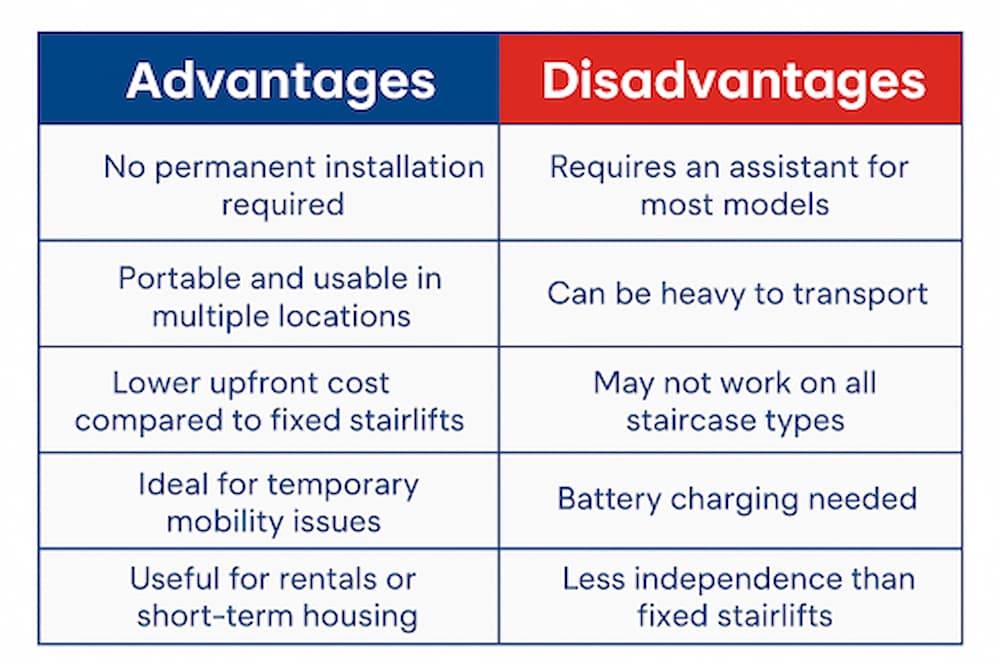
In summary, mobile stairlifts offer flexibility and accessibility without long-term commitments. However, they may not be suitable for every staircase or personal situation and often require assistance during use.
Types of Mobile Stairlifts
Mobile stairlifts come in several designs, some using tracks while others use wheels. The best option depends on the user’s mobility needs, the staircase and whether a carer is available to help.
Let’s explore some of the most popular mobile stairlift types.
Tracked Mobile Stairlifts
Tracked stair climbers use motorised tracks or caterpillar-style treads that grip each step, providing a smooth and stable ascent and descent. These models are particularly suitable for straight staircases and can handle heavier users. They are ideal for those who need a strong, reliable solution and prioritise safety and stability over portability.
Wheel-Based Mobile Stairlifts
Wheel-based stair climbers are lightweight and versatile, using multiple wheels to “walk” up and down stairs. These models are easier to transport between locations and can sometimes navigate minor curves in staircases. They are best suited for homes with moderate mobility needs or temporary use, offering a balance between portability and functionality.
Seated Mobile Stairlifts
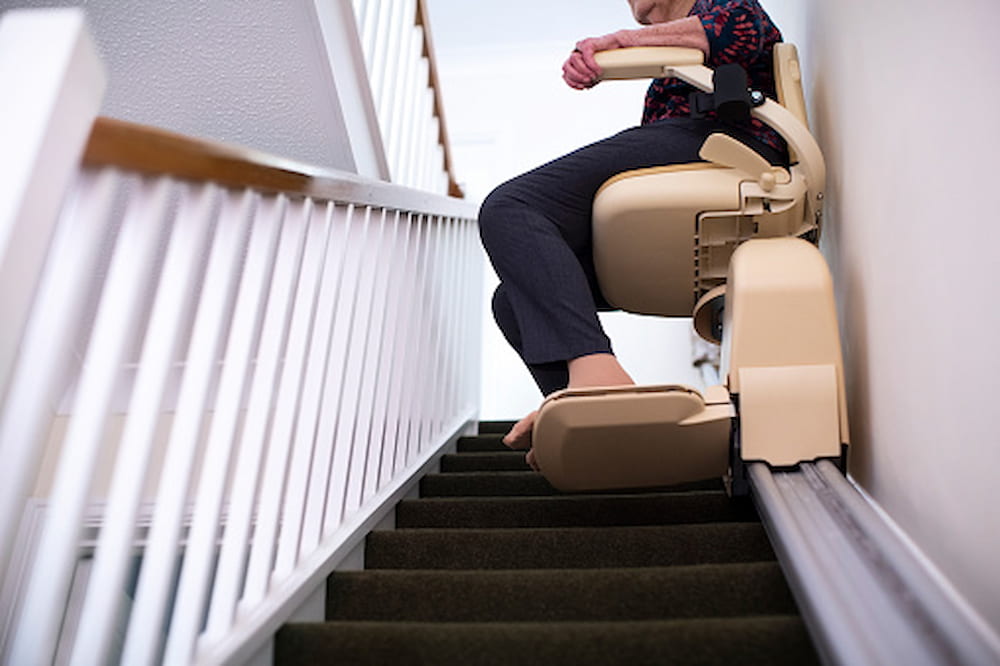
Seated mobile stairlifts are equipped with a comfortable chair, armrests, and safety belts to ensure secure transport. They are ideal for longer use, providing both comfort and safety, particularly for elderly users or those who need extra support. Many models also fold for easier storage when not in use.
Standing Mobile Stairlifts
Standing or platform mobile stairlifts are designed to allow users to stand safely or transport a wheelchair or mobility scooter directly. These are often used in medical or care settings, where users may have limited ability to sit during travel.
Foldable Mobile Stairlifts
Compact and foldable mobile stairlifts are designed for easy storage and transport, making them perfect for smaller homes or temporary use. They can be quickly folded and stored out of the way when not in use, providing a practical solution without occupying permanent space on the staircase.
All mobile stairlifts work differently, so it’s important to check whether it is suitable for the user and the staircase. Before buying, check the weight limit, safety features, transfer requirements and whether a trained carer is needed.
Mobile Stairlifts vs Traditional Stairlifts
Mobile stairlifts offer flexibility and portability, making them great for temporary or short-term mobility needs, while traditional stairlifts provide a permanent, long-term solution for daily use.
Before you buy a stairlift, let us help determine which option is best for you or your loved one:
| Feature | Mobile Stairlift | Traditional Stairlift |
|---|---|---|
| Suitability | Short-term mobility needs, rentals, and temporary injuries. | Long-term mobility support at home. |
| Installation | No permanent installation | Permanent installation |
| Portability | Can be moved between locations | Cannot be moved between locations |
| Cost | Lower upfront cost | Higher upfront cost due to installation |
| Operation | Often requires an assistant for safe use | Can be operated independently |
| Weight/Size | Lightweight and compact, with some foldable models | Heavier and larger, occupying permanent staircase space |
| Staircase Compatibility | Works best on a standard straight staircase (some wheel-based models can manage minor curves) | Works on any stairlift type, with straight, curved, hinged-rail, and narrow stairlifts available |
| Maintenance | Requires battery charging and regular safety checks | Requires ongoing, regular safety checks and servicing |
| Independence | Limited, and may require supervision | Limitless, offering great independence |
| Flexibility | Ideal for temporary or changing mobility needs | Ideal for permanent, long-term use |
Both mobile and traditional fixed stairlifts can be good options. The right choice depends on your mobility needs, staircase, budget and whether you need a temporary or long-term solution.
Is a Mobile Stairlift Right for You?
Deciding whether to invest in a mobile stairlift involves evaluating several factors to make sure it aligns with your mobility needs, living situation, and budget.
1. Frequency of Use
Short-Term Recovery: If you’re recovering from surgery or an injury, a mobile stairlift can provide temporary assistance without the commitment of a permanent installation.
Occasional Use: For individuals who need assistance navigating stairs occasionally, a mobile stairlift offers flexibility without long-term obligations.
Daily Assistance: If you require daily assistance, a traditional stairlift might be more suitable, as it offers a permanent solution tailored to your home’s layout.
2. Location and Staircases
Multiple Locations: Mobile stairlifts are designed for portability, making them ideal if you need to use them in different homes or on various staircases.
Single Location: If your mobility challenges are confined to one home, a traditional stairlift can be installed to fit your specific staircase, providing a more permanent solution.
3. Home Type
Rented Property: Mobile stairlifts are advantageous in rented homes where permanent modifications aren’t permitted. Their portability means that you can take them with you when you move.
Owned Property: If you own your home and plan to stay long-term, investing in a traditional stairlift might be more cost-effective and tailored to your needs.
4. Assistance Availability
Independent Use: Mobile stairlifts are designed for easy operation, allowing users to get up stairs without assistance.
Need for Assistance: If you require help to operate the stairlift, make sure that caregivers are trained and comfortable with its use.
5. User Comfort
Chair vs. Platform: Mobile stairlifts typically come in chair models, suitable for users who can sit and transfer independently.
Long-Term Comfort: For extended use, consider features like padded seats, adjustable footrests, and safety belts to improve comfort and security.
6. Budget
Upfront Costs: Mobile stairlifts in the UK typically range from £1,500 to £3,500, depending on the model, features, and brand.
Rental Options: Renting a mobile stairlift is a practical solution for short-term needs, with weekly fees usually between £50 and £100. If you are trying to work out whether you should buy or rent a stairlift, check out this handy guide from Halton Stairlifts.
Maintenance Costs: It’s important to factor in maintenance and battery replacement costs over time. Regular servicing ensures the stairlift remains safe, reliable, and long-lasting.
Final Considerations
- Safety Features: Look for models with seat belts, reliable braking systems, and solid footrests.
- Adaptability: Make sure the stairlift can accommodate your specific staircase type, whether straight or curved.
- Installation: Mobile stairlifts often require minimal installation, making them a convenient option for renters or those in temporary living situations.
- Resale Value: Consider the potential resale value if you no longer need the stairlift. Some providers offer buy-back options.
Alternative Stairlift Options at Halton Stairlifts
If you don’t feel as though a mobile stairlift is the best option to aid your mobility, we can help.
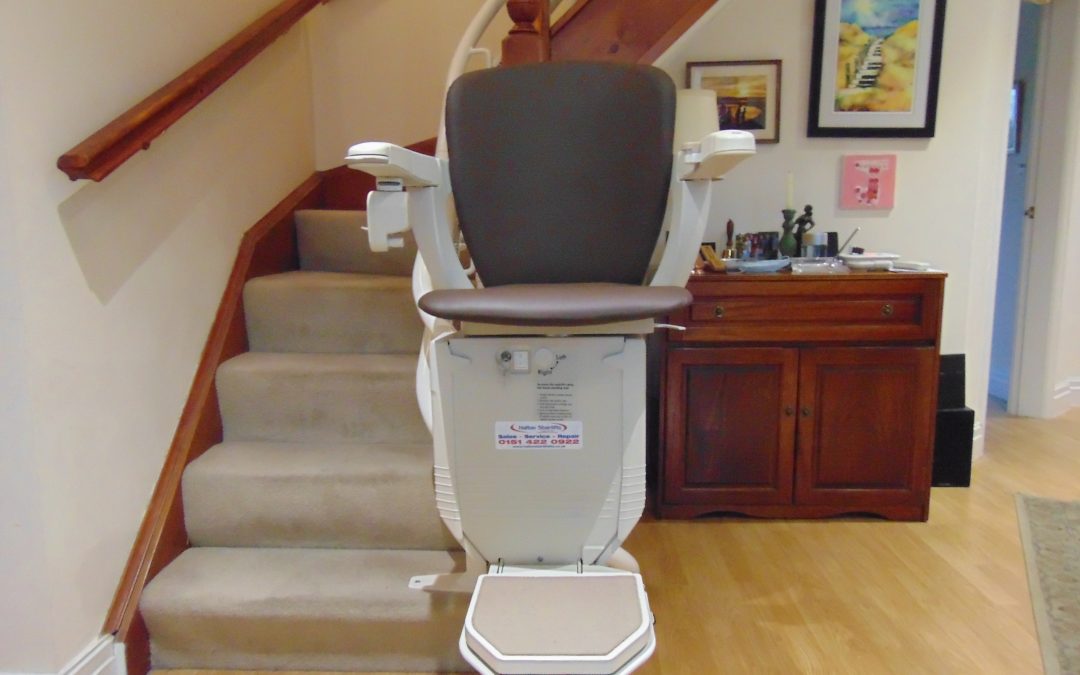
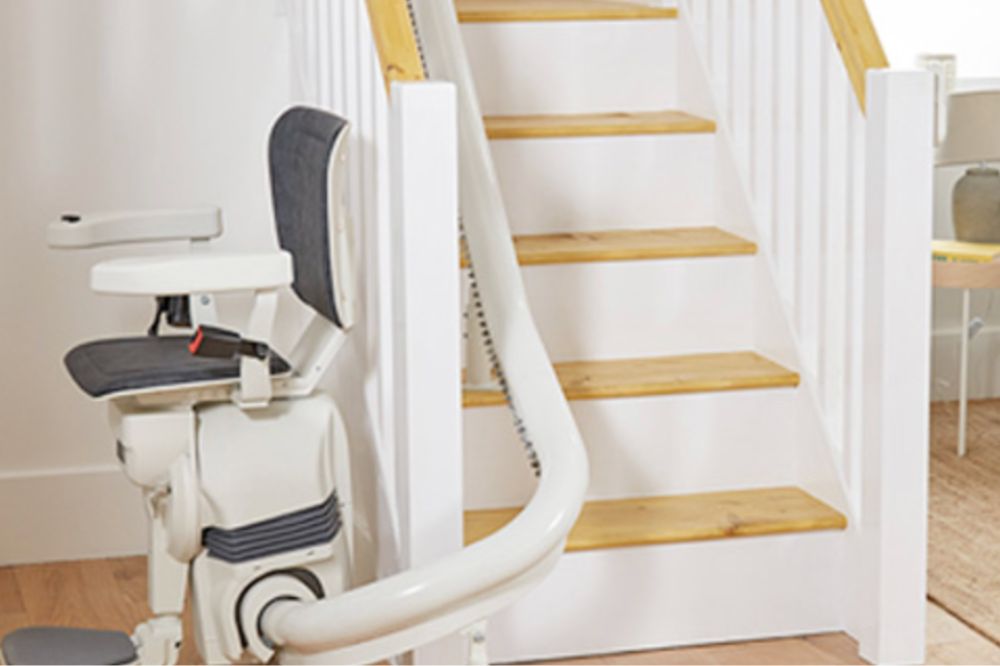
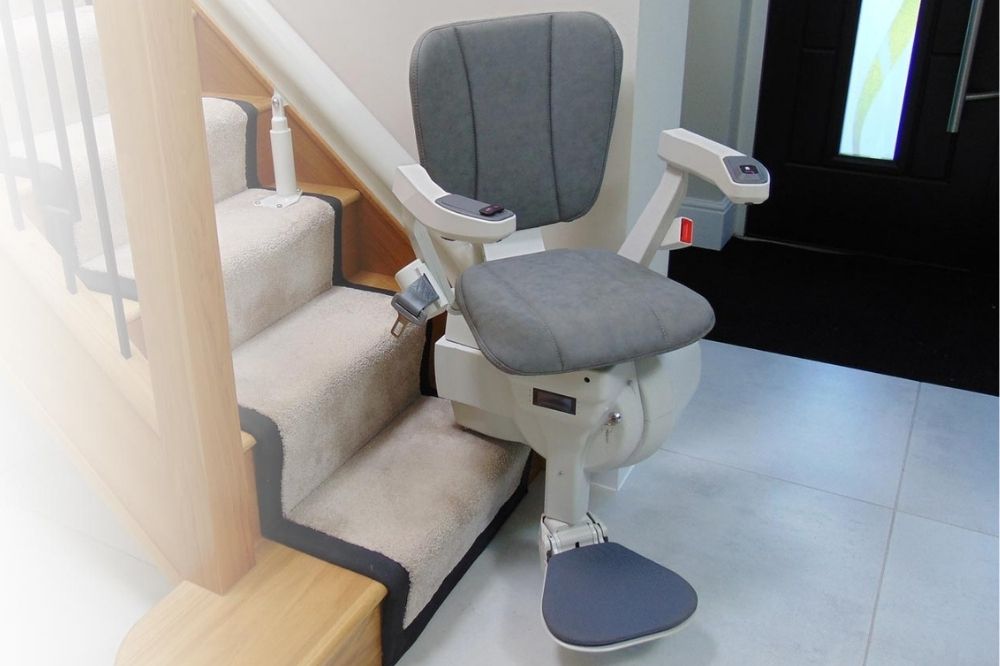
At Halton Stairlifts, we offer a wide range of traditional, fixed stairlifts. If you’re considering your options, a permanent stairlift may be the most suitable choice for your needs and circumstances. From straight stairlifts to curved models, we can advise on the best option for your home and lifestyle. Our DBS-checked engineers provide free, no-obligation quotes tailored to your home and mobility needs, saving you valuable time and ensuring you find the right stairlift solution.
Contact us today and take the first step towards greater independence at home.

Neil is the founder of Halton Stairlifts. He has years of experience installing stairlifts across the UK. With an eagerness to help those with mobility issues get up the stairs, Neil understands how important it is for a seamless and straightforward approach to installing stairlifts to help those in need quickly.